U.S. Nail Care Products Consumer Insights - Usage, Attitudes, And Brand Performance Report
Introduction:
Over the past few years, the U.S. nail care industry has experienced incredible growth. People are paying more attention to their nails, adding them as an important part of their self-care routine. From salons to at-home treatments, nail care products have become an important part of daily beauty practices. Consumers are demanding high-quality and eco-friendly products. All the while, expecting sustainable and ethical practices by implementing less waste and recyclable materials. With the rise of social media and e-commerce, it's easier than ever for people to discover new nail products, share tips, and stay up to date on the latest trends. Today, the nail care industry focuses on blending beauty and health to offer products that suit every style, need, and preference. Here are some of the market trends prevailing in the nail care market:
-
Healthy and Eco-friendly Products: The nail care market is expanding as consumers seek beauty and wellness products. Brands are offering polishes and treatments that strengthen nails, protect against damage, and enhance overall nail health. Simultaneously, eco-friendly options are gaining traction as consumers emphasize natural ingredients and sustainable packaging, choosing environmentally safe products that support nail health while being gentle on the planet.
-
At-Home Manicures: With the rise of e-commerce and social media tutorials, many people are now doing their manicures at home. This has led to an increase in nail care kits, tools, and polishes designed for easy use at home. This shift helps them save a significant amount of time and money compared to salon visits, where services cost more.
-
Personalized Products: People are looking for nail care products that fit their style. There is a trend toward unique colors, custom designs, and nail care routines tailored to individual needs, like products for brittle or strong nails.
Methodology:
The insights covered in this report are drawn from GVR’s ‘Voice of Consumer Survey’ and its periodic updates. The latest survey represents 75,000+ consumer interviews conducted across 20 countries for 100+ product categories. These insights are specifically catered to the brands operating in the nail care industry to guide them in their strategic decision-making process. This report provides insights covering category usage & attitude, buying behavior, brand performance metrics, and brand health indicators of leading players in the U.S. nail care market.
Chapter 1: Usage and Attitude
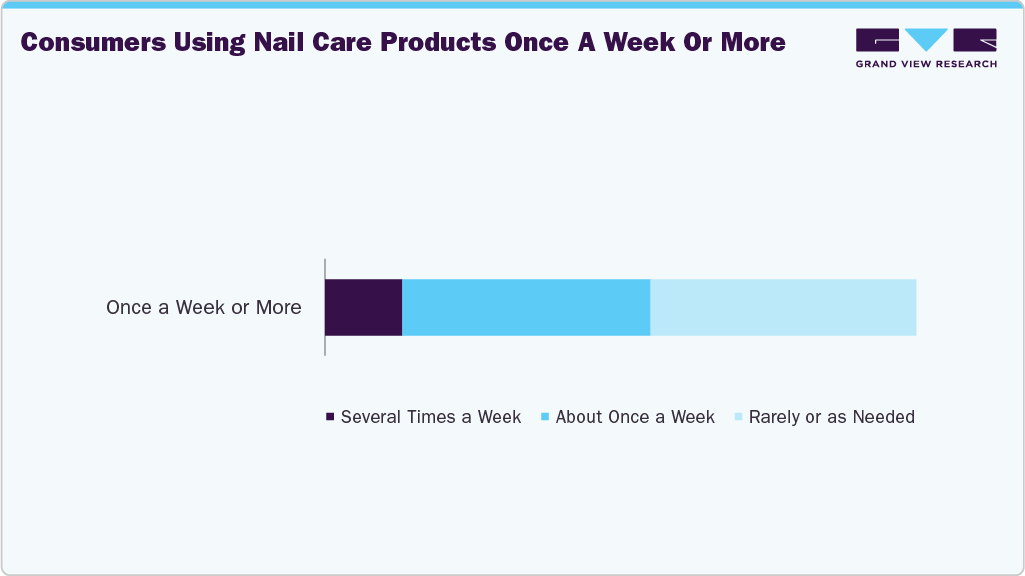
The U.S. nail care industry has seen a huge shift with consumers associating getting nails done with self-care. With that in mind, whilst a significant portion of consumers use nail care products once a week, a lot of them also use them as per the requirement. This is because nail care is not a daily part of the routine, as it requires less frequent maintenance.
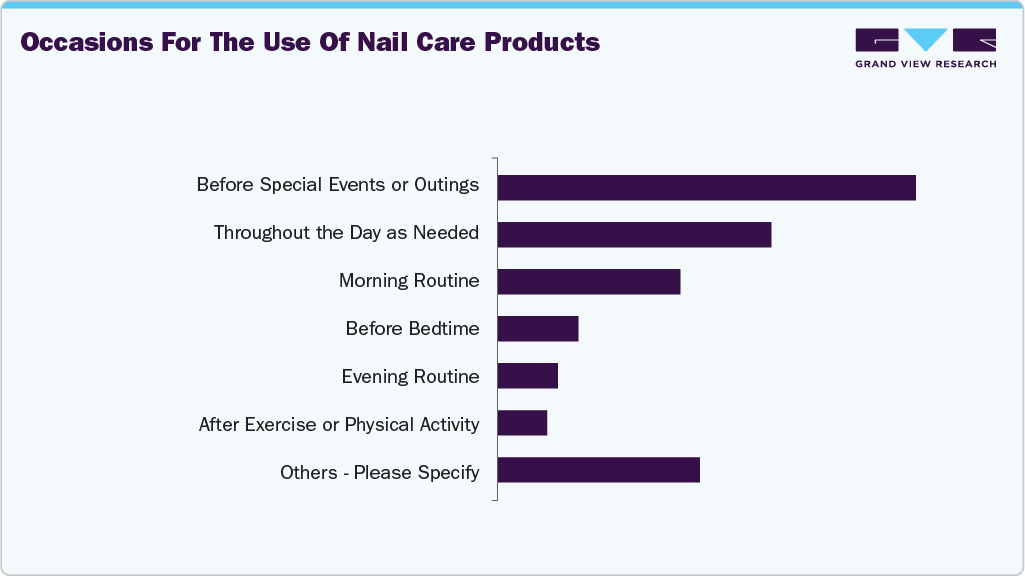
Nail care products are mostly used before special events and outings, according to more than 4 out of 10 consumers. Since consumers prefer to get their nails done before an event or before travel, as it is associated with additional grooming, there is less room for brands to encourage more frequent consumption. However, by introducing products that can be incorporated into a skin/self-care routine, brands can seize the opportunity to increase usage. These products can be nail oils, serums, or cuticle care products that require frequent application.
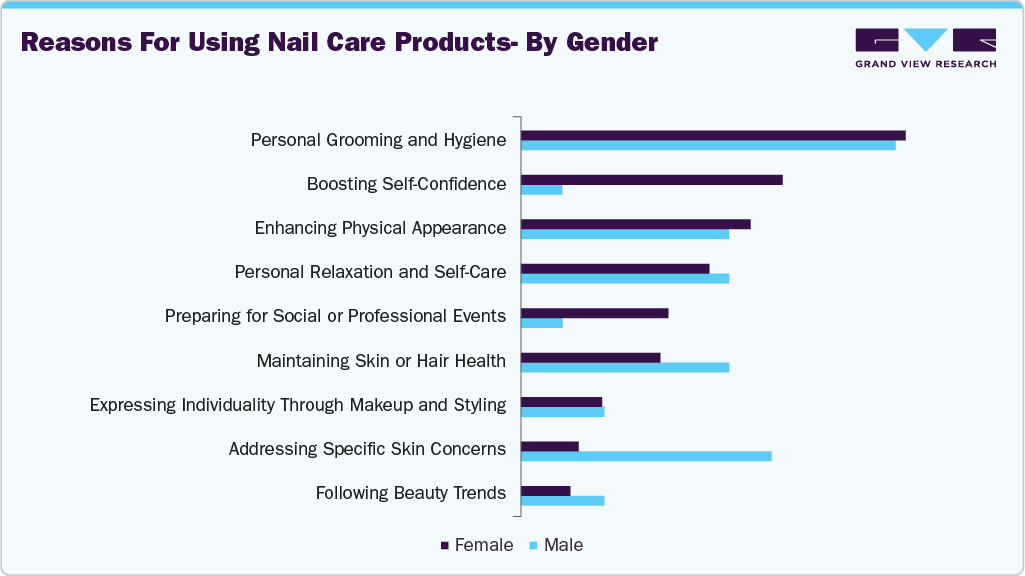
When it comes to reasons for using nail care products, overall personal grooming and hygiene is a key driver, consistent across both men's and women's. However, for women, the second aspect is boosting self-confidence, whereas for men, it is addressing specific skin concerns. Expressing individuality through nail care is also an emerging trend among both men and women. They also associate nail care with relaxation and improved self-confidence; however, some aspects of nail care, such as getting your nails painted by a professional, can be expensive since there is a huge demand for this service, and the salons have been charging more to keep up with the demand, raising affordability concerns. Brands need to provide products that offer ease of application combined with efficacy. Also, some of the nail colors contain harsh ingredients that damage the nail bed and make nails brittle in the long term, which is another growing concern among consumers.
Buying Behavior
Consumers prefer information about certain aspects before purchasing nail care products. These are pricing and affordability indicators, suggesting the presence of price-conscious consumers amid rising prices and a growing recession. Followed by product quality and brand reputation in the market. Since nail care products are used less frequently, a larger proportion of consumers restock them only once a month.
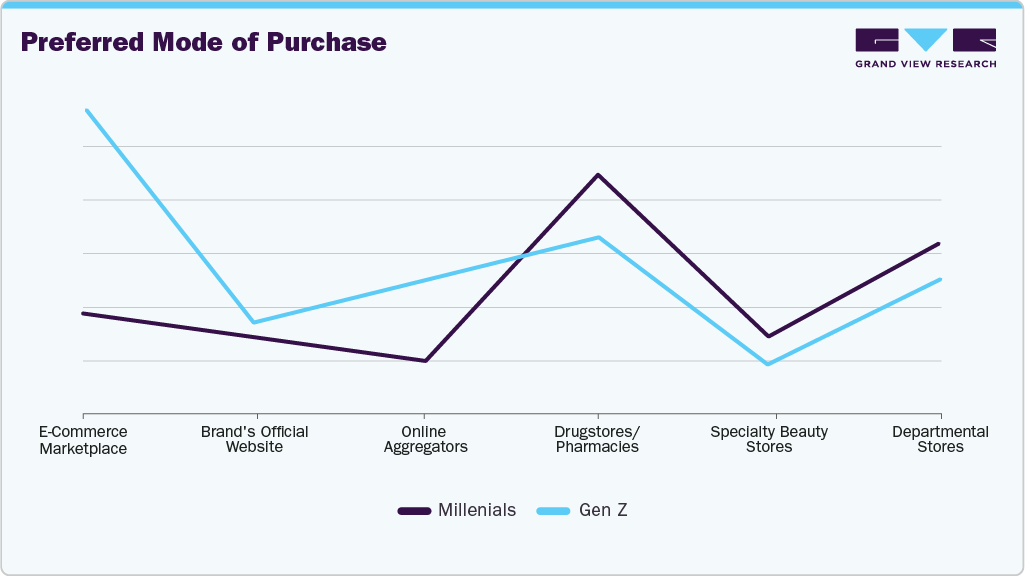
When it comes to the mode of purchase overall, department stores and drugstores are the most common modes. However, further looking into Gen Z, e-commerce is a popular platform, and for Millennials, the drugstore is a go-to place.
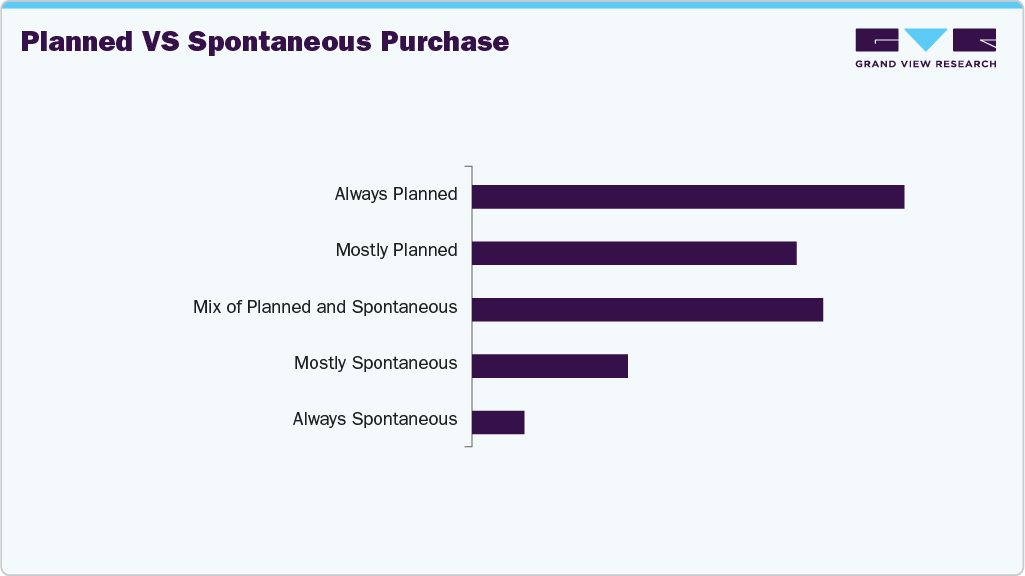
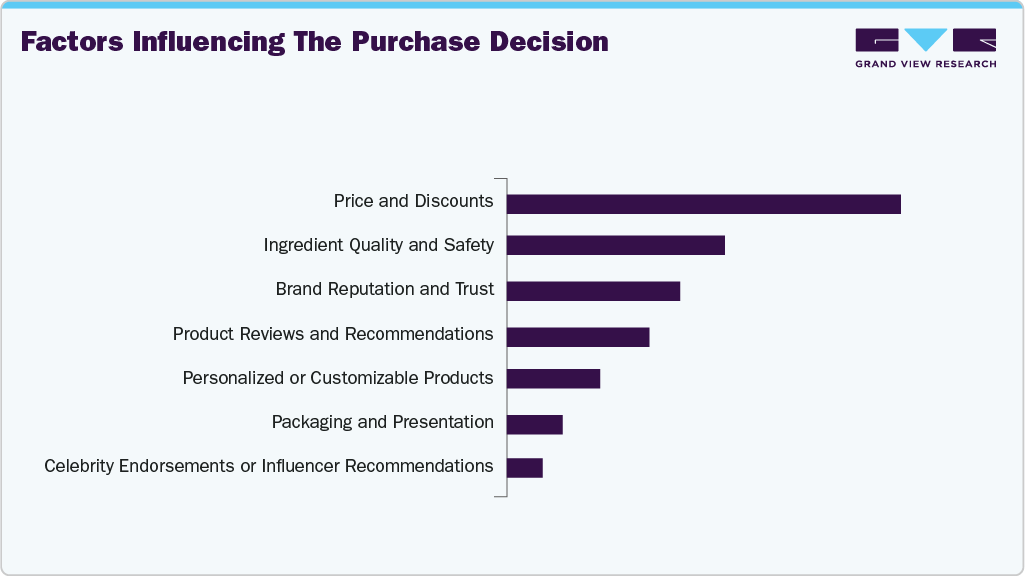
Almost 6 out of 10 consumers plan their purchases; however, a good proportion are spontaneous, presenting an opportunity for brands to leverage the driving factors and encourage higher consumption, even among consumers who always plan their purchases. Some of these factors are pricing or discounts, as expected, followed by packaging and presentation. This is because caring for nails is largely associated with appearance; thus, distinctive and appealing packaging attracts consumers.
Similar to the driving factor for a spontaneous purchase, price and discounts lead the way, even for a well-thought-out purchase. This is a strong sign that consumers are very sensitive to pricing strategies, such as sales, promotions, and discounts. Thus, brands that offer products at lower prices mean nail salons charge less, attracting more consumers and more frequent visits. Further, ingredients and brand reputation are also significant, as growing awareness of harmful chemicals has led to the deterioration in nail bed quality and can cause several skin diseases due to prolonged exposure.
Brand Power Play (Brand Health and Performance)
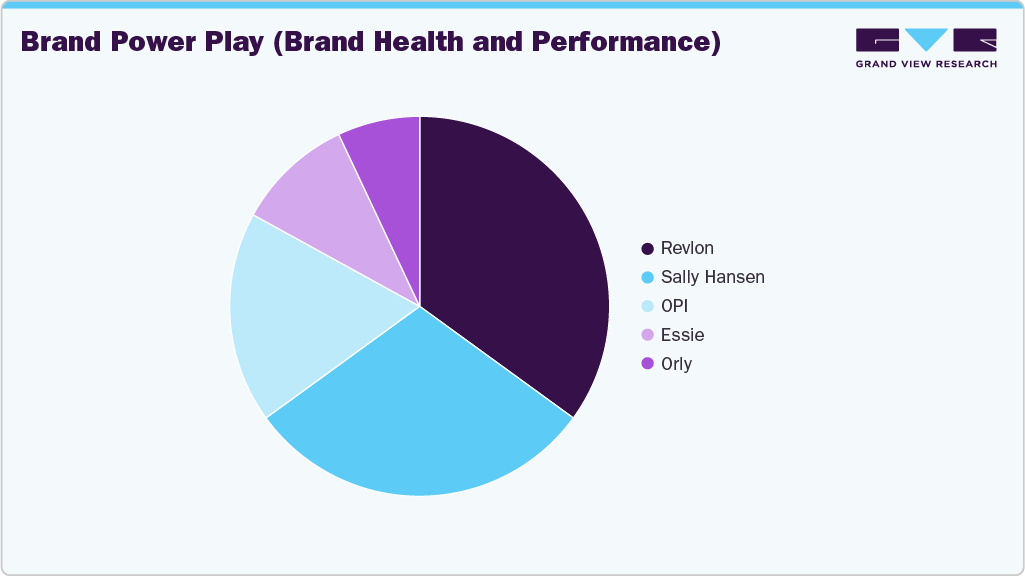
For nail care, some of the popular brands in the U.S. include Revlon, Sally Hansen, OPI, Essie, and Orly. The industry is not saturated, providing opportunities for growth; however, some of the prominent brands, mainly Revlon and OPI, continue to retain their position through constant innovation and long-standing presence.
Purchase Funnel
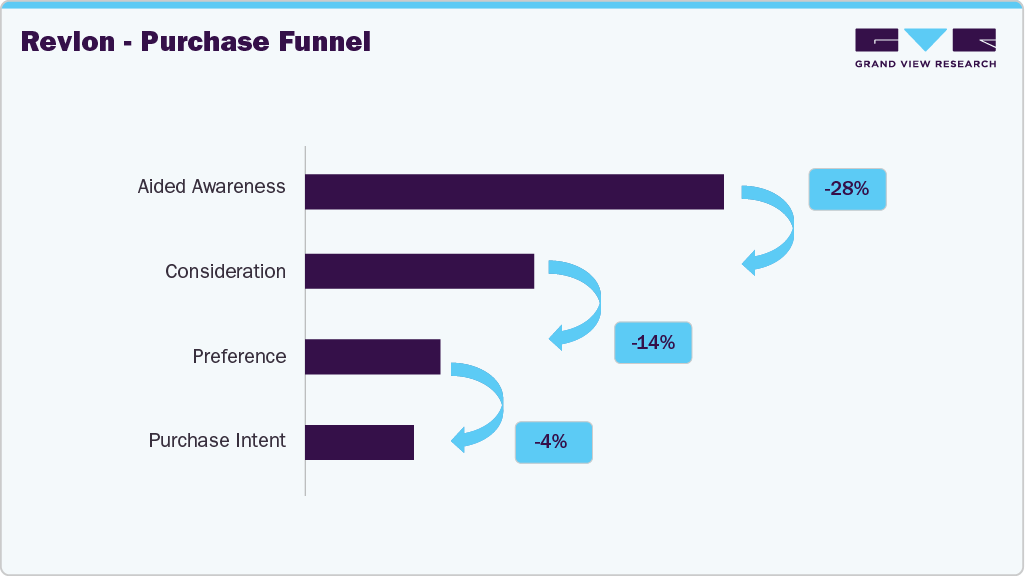
Given the lack of competition, Revlon and Sally Hensen enjoy high awareness and strong consideration. Revlon, as seen below in the purchase funnel, leads the way for preference and purchase intent but drops down at usage. This is where Sally Hensen climbs up the ladder, beating Revlon on usage levels. This is due to higher satisfaction levels, which encourage consumers to go back to the brand. For brands like OPI, the awareness is lower than Revlon and Sally but enjoys higher repeat purchase levels, showcasing that the current customers are happy with their purchase, serving as a major competitor for Revlon. Thus, it is important for prominent brands to offer high-quality, affordable products to build brand loyalty.
The overall NPS score of the leading brands varies from 28 to 36, with OPI placed on the higher end of the scale, obtaining a 36% NPS score.
